
Plastic thermoforming
Technology
Technology
Deep drawing of plastics:
This is how our process works
In deep drawing, also known as thermoforming, a plastic sheet is initially heated until it can be formed. A vacuum is then formed, with which the plastic is sucked into a temperature-controlled mold. The warm plastic sheet adapts to the mold contour and is then cooled to below the deformation limit by the temperature control of the mold and the blower so that the plastic retains its final shape.
The result of the thermoforming process is precise and dimensionally stable. Not only the cooling time, but also the heating time depends on the thickness of the plastic sheets and the type of plastic.
Plastic thermoforming – a technology with a future
Thermoforming is a pioneering process in plastics processing. This technology enables the cost-effective and fast production of lightweight but stable components. It can be used in various industries, as it can produce complex geometries while saving material at the same time. This means that thermoforming will continue to play a key role in the production of innovative and environmentally friendly products in the future.
Thermoforming has the edge here: Advantages of thermoforming over GRP and injection molding
Thermoforming has the edge here: Advantages of thermoforming over GRP and injection molding
swissplast as the first point of contact for everything to do with thermoforming plastics
swissplast as the first point of contact for everything to do with thermoforming plastics
swissplast is one of the largest thermoforming companies in Europe. We always pay attention to the high quality of our thermoformed parts and use the latest technologies in plastics engineering. We only use technically sophisticated plastics with a maximum forming area of 3000 x 2000 x 1000 mm for thermoforming and deep-drawing. We also pay attention to sustainability when thermoforming plastics in order to conserve the earth’s resources.
Do you have any questions about plastic thermoforming or would you like advice? Then please contact our team, we look forward to hearing from you!
What are the individual steps involved in thermoforming plastic?
What are the individual steps involved in thermoforming plastic?
Plastic thermoforming involves several work steps. We have briefly summarized these:
- Heating the plastic sheet: The plastic is heated until it becomes viscous and malleable.
- Deformation of the plastic: The sheet is preformed, increasing its surface area.
- Molding the plastic: The moldable sheet is pulled over the template and takes on its shape.
- Cooling and hardening: The deformed plastic is cooled, whereby it becomes solid again and retains its new shape.
What are the advantages of thermoforming plastics?
What are the advantages of thermoforming plastics?
The thermoforming process for plastics is now a popular method for producing individually shaped plastic components for various industries.
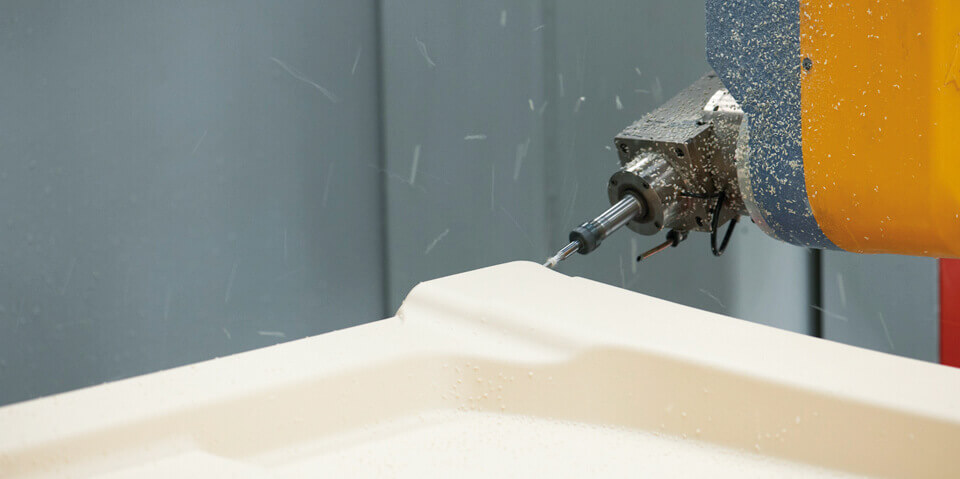
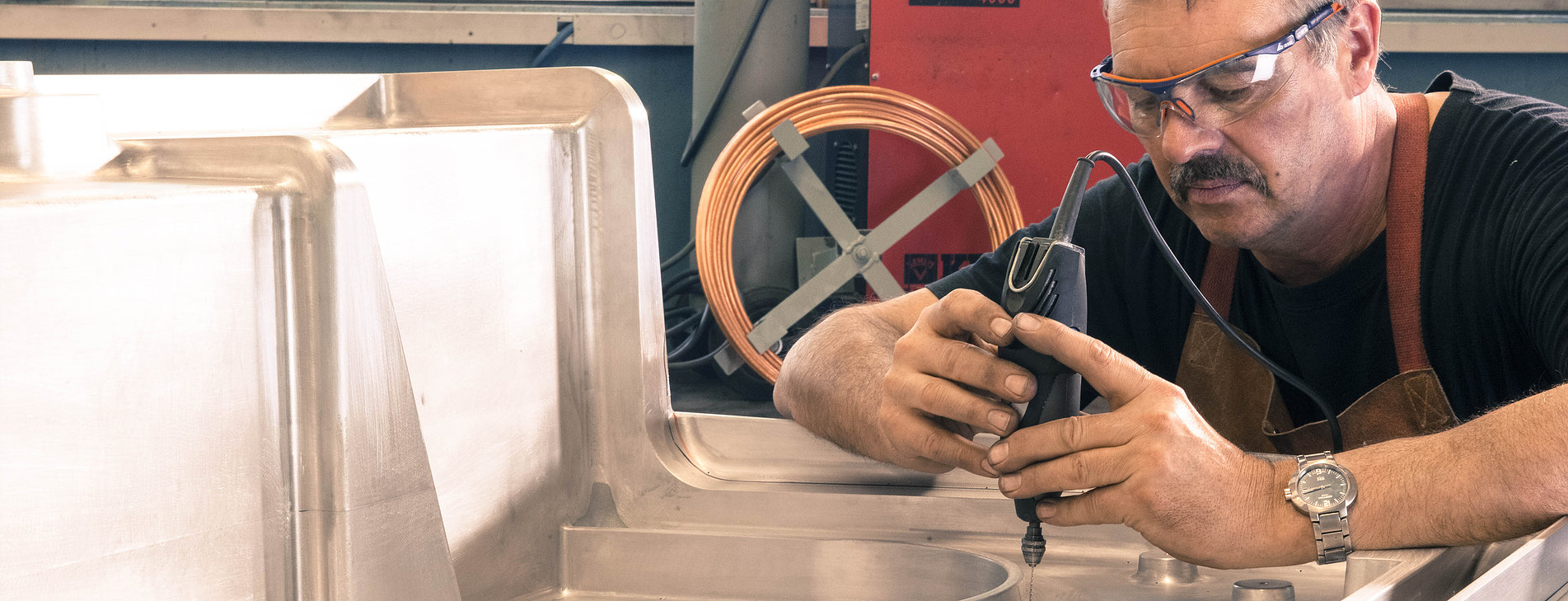
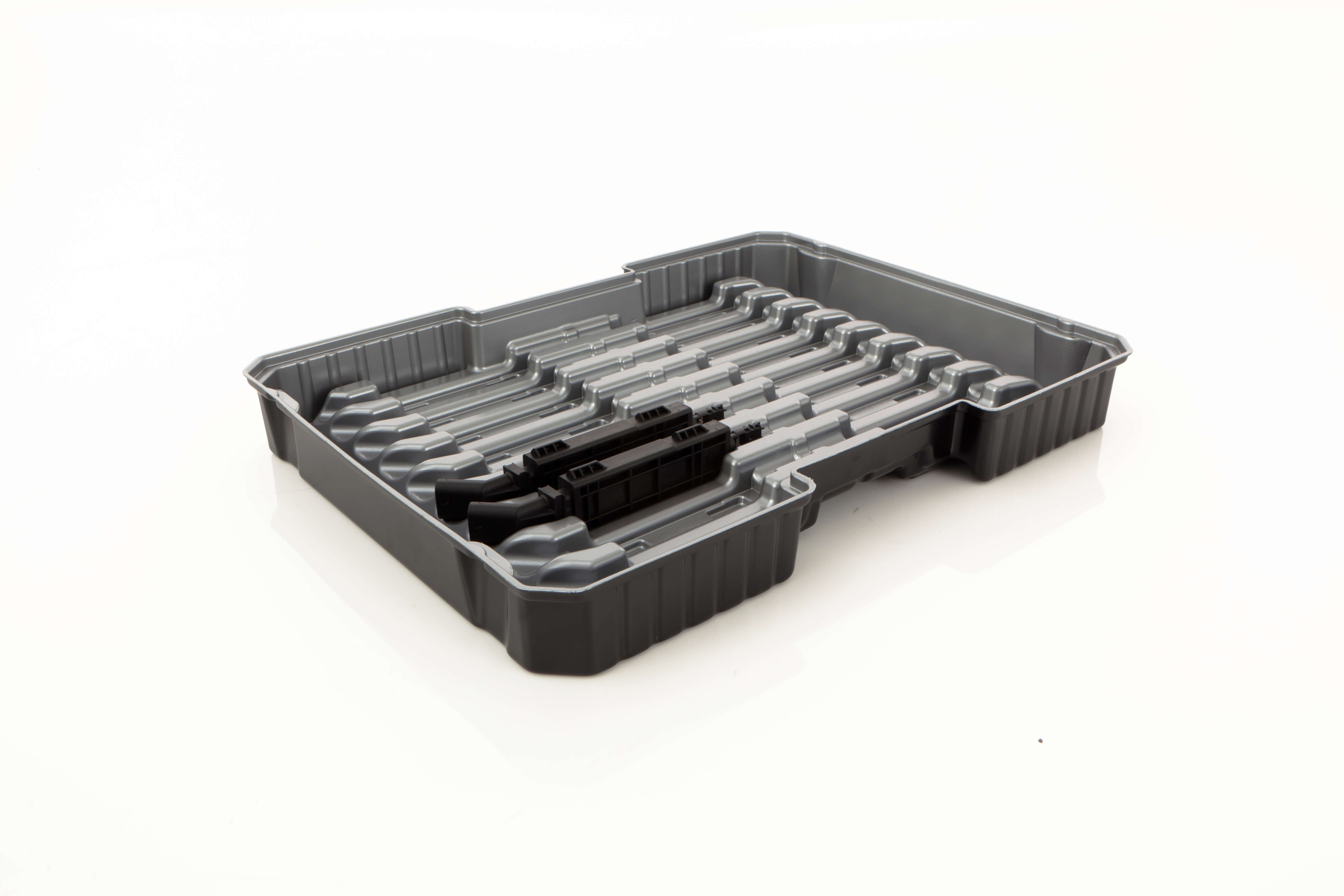
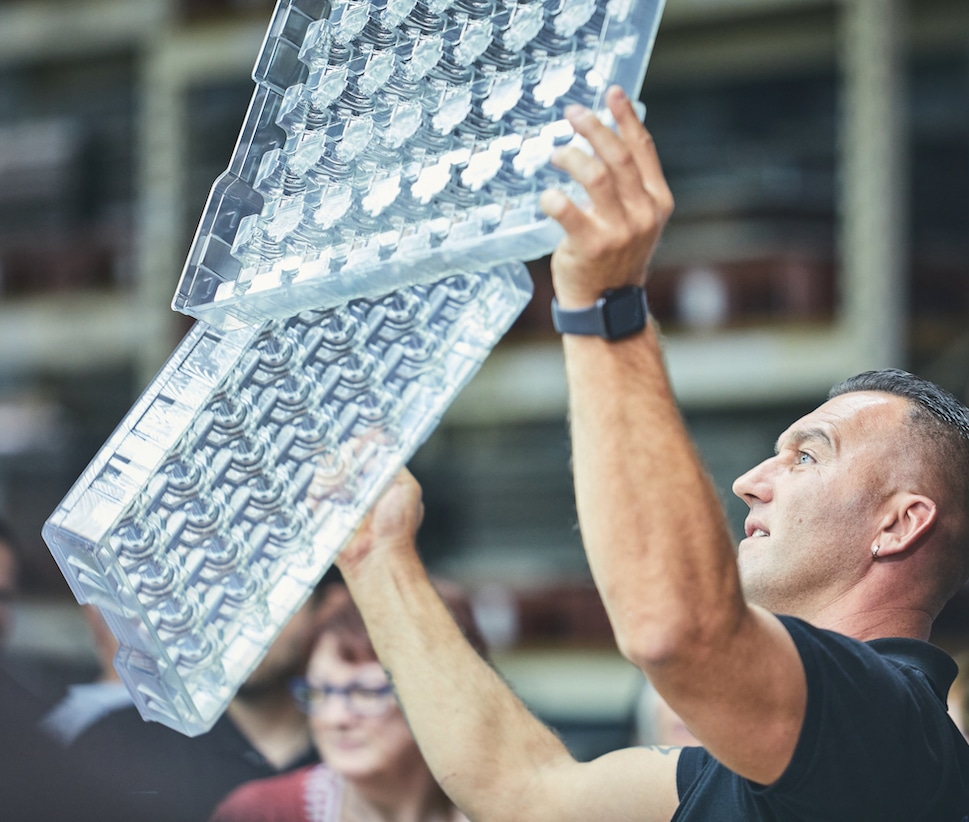
swissplast uses the innovative thermoforming process to quickly and efficiently produce high-quality plastic trays, molded plastic parts, plastic blister packs and plastic transport containers. In addition to the cost factor of vacuum thermoforming, the many materials that can be used are also positive aspects of thermoforming. The individualization of plastic moulded parts is made particularly easy with vacuum thermoforming and vacuum thermoforming and has few limitations. At swissplast, processes such as CNC milling and drilling are used as standard to prepare the respective workpiece for use.
The strengths of thermoforming: price, weight & production time
The strengths of thermoforming: price, weight & production time
Thermoforming is mostly used in the production of thin-walled plastic packaging such as disposable cups. The use of the thermoforming process is based on its numerous advantages. With thermoforming or deep drawing, for example, the production of smaller quantities is cheaper than with injection molding or rotational molding. This is due to the low tool costs. Thermoforming also produces large batch sizes quickly and cost-effectively; a decisive advantage over the use of GRP.
Another advantage is the low weight of the molded thermoformed parts. As thermoforming produces thin-walled results, the parts are very light, which means that the plastic packaging from swissplast saves costs in transportation and logistics. In addition, the molded, thin-walled plastic parts require little cooling time and are therefore quick to produce.
Interesting facts about deep drawing
There are various terms, but they all describe the same work process:
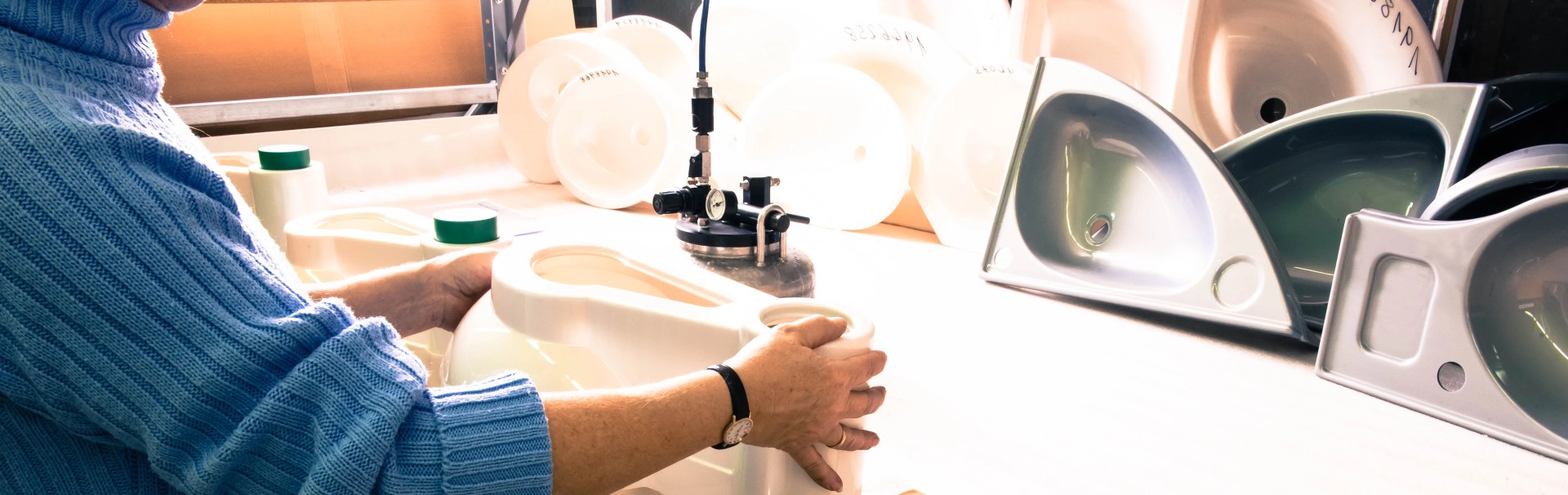
Deep drawing, thermoforming and vacuum deep drawing are the basic types of processing and shaping of plastic sheets for different applications (e.g. cladding, coverings, covers or intermediate layers). The target industries for thermoformed products are diverse: from the automotive industry to mechanical engineering and sanitary engineering, molded plastic parts are used in all sectors of the economy. The initial sheets are formed by heating and subsequent mechanical forming. With regard to your requirements, there are virtually no limits to the customization of plastic moulded parts.
How long has the plastic technology of thermoforming existed?
The history of thermoforming plastic began in the 1930s, when plastics such as PVC and polystyrene became increasingly available. Initially, the process was mainly used for simple packaging and household items. With the further development of plastic materials and technology in the 1950s and 1960s, thermoforming experienced an upswing. New machines made more precise and complex shapes possible, allowing the process to find its way into the automotive, medical and electronics industries. Today, thermoforming is an important part of modern manufacturing processes, with new, sustainable plastics and automation technologies continuing to drive development.
We at swissplast are proud to be able to continue this tradition and at the same time set the tone for an innovative and future-oriented use of the technology. Our aim is to explore new paths for thermoforming and make it available for growing markets.
The plastics industry is increasingly benefiting from technological advances in the thermoforming process. swissplast is increasingly relying on automation and CNC (Computerized Numerical Control) technology to increase the precision and efficiency of production. By using CNC machines, complex geometries can be realized with maximum precision and minimal material waste.
At the same time, the integration of 3D printing is becoming increasingly important: prototypes and tools can be produced and adapted more quickly, which significantly shortens development times. These new machine technologies enable more flexible, cost-effective and sustainable production – a significant step forward for the future of deep drawing.
Deep drawing normally takes place in four steps:
- Heating the plastic: The initial sheets are heated to such an extent that they can be formed. Depending on the type of plastic and material thickness, this process takes several minutes. As the heating increases, the plastic sheet melts and becomes viscous.
- Forming plastic: The heated initial sheet is pre-stretched to the correct initial shape. The soft plastic sheet is placed over the template and takes on its rough basic shape.
- Molding the plastic: This is followed by the refinement of the molded part. Now the plastic is brought into its planned and final shape. This can be done using either a vacuum or compressed air. All cavities are removed in this production step so that the plastic part now sits directly on the template.
- Cool and demold the plastic: This is the final step in plastic thermoforming. As soon as forming is complete, the molded part is cooled down again so that it does not deform any further and then removed from the template. Excess edges are now removed from the molded part. The plastic part can then be finished with further work steps such as milling or assembly production.
There are generally two approaches to producing a deep-drawn part.
The first method is positive forming. Here, the dimensioning is carried out on the inside of the deep-drawn part, whereby the molding accuracy of the molded part is also on the inside. Ultimately, the shape is determined by molding the outer contour.
The second technique is the production of plastic molded parts by negative molding. In this approach, the part is manufactured by molding the inner contour. The dimensioning when drawing the molded parts and their molding accuracy is carried out on the outside.
swissplast manufactures thermoformed plastic parts using both positive and negative forming. This allows us to flexibly adapt production to your requirements and guarantee the quality of the thermoformed plastic parts.
Do you have any questions about thermoforming, our products and manufacturing processes? Please send us an e-mail to info@swissplast.com!
swissplast specializes in vacuum thermoforming and is one of the world’s leading production facilities for plastic moulded parts in various industries. In principle, all common thermoplastics are suitable for the production of plastic parts:
- PS (polystyrene)
- ABS plastic (acrylonitrile butadiene styrene plastic)
- PC (polycarbonate)
- PMMA & PET (polymethyl methacrylate)
- PE (polyethylene) & PP (polypropylene)
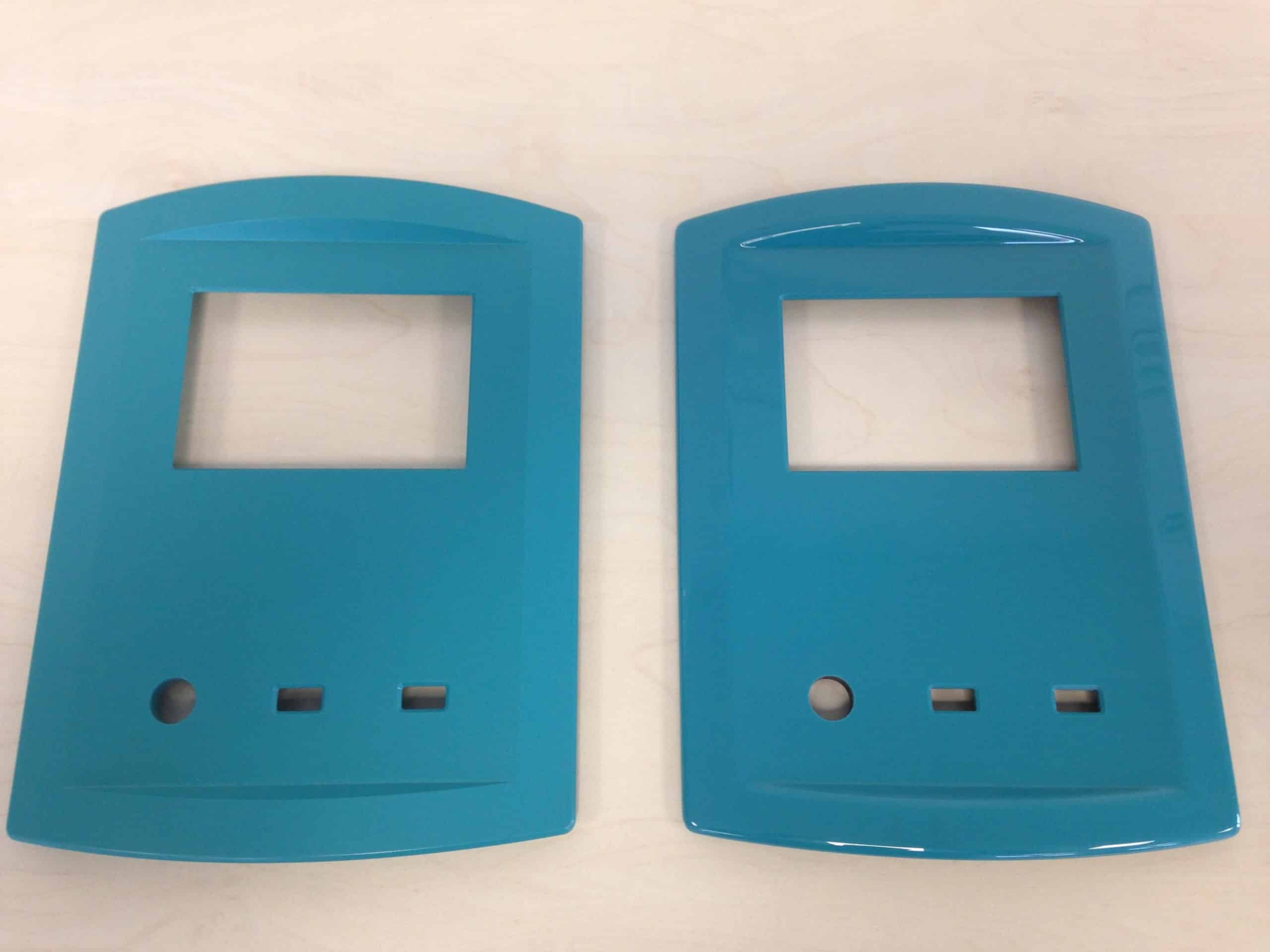
In addition, swissplast can process the multilayer sheets (coextrusions) or material mixtures (blends) and regenerates made from the thermoplastics. There are also no limits to the surface finish of the plastic. swissplast produces a wide variety of surfaces and can work and manufacture to the highest quality standards, from high-gloss to very matt, from fine-grained to leather-grained, from printed to laminated.
Through targeted process optimization, swissplast can save considerable costs in plastic thermoforming and make production more efficient. Automation plays a central role here, improving the material flow and production speed. The use of modern CNC technology enables precise and repeatable processing steps, which minimizes waste and uses material more efficiently.
The use of simulations and digital process monitoring also helps to reduce production errors. We can also react more quickly to market changes thanks to optimized tool usage and shorter set-up times. These measures lead to more sustainable production, which simultaneously reduces costs and increases our competitiveness.
The demand for thermoformed plastic has increased significantly in recent years, mainly due to the growing demand for lighter and more cost-effective materials. Compared to other manufacturing processes, such as injection molding, thermoforming offers several advantages, including lower tooling costs and faster production times, which is particularly beneficial for small and medium-sized series.
The packaging industry has strongly driven the demand for thermoformed plastics, but the automotive and medical industries are also increasingly turning to this technology to produce lighter components. swissplast is active in all these sectors and can supply its customers with state-of-the-art products.
Compared to injection molding and 3D printing, thermoforming also enables the cost-effective and efficient production of thin-walled, large-area parts. This is particularly advantageous for large-volume and simple molded parts, while more complex or more heavily stressed components are often still manufactured using injection molding.
Further topics