
Forming/bending plastic
Technology
Technology
Plastic forming & bending – flexible solutions for a wide range of applications
Plastic forming and bending opens up a wide range of possibilities with thermoplastics for individual, precisely fitting components. Whether complex radii, curved panels or customized housings – we implement ideas precisely using modern plastic forming processes. Swissplast offers customized components with high dimensional accuracy, flexibility and material diversity.
Procedure & services
Plastic forming & bending
Plastic forming & bending
Typical areas of application
Typical areas of application
Bent and formed plastic components are used in many technical and design areas, including for:
-
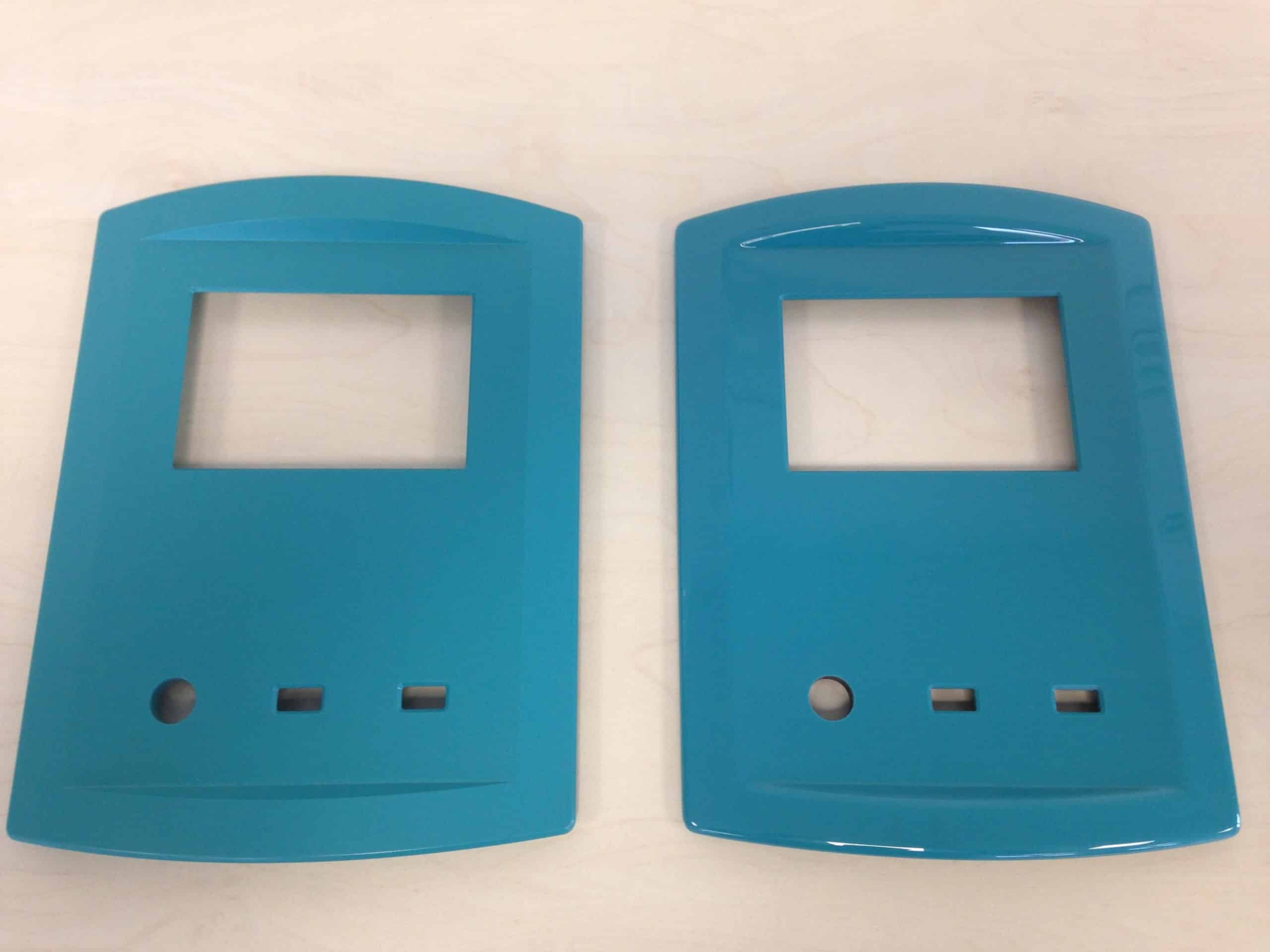
Enclosures, covers and panels for machines and appliances
-
Interior and exterior cladding for vehicles, special or emergency vehicles
-
Architectural and design elements with curved or free-form surfaces
-
Furniture construction, interior fittings, displays or trade fair construction with curved components
High freedom of form allows precise functional and optical components.
Thermoforming instead of standard thermoforming
Thermoforming instead of standard thermoforming
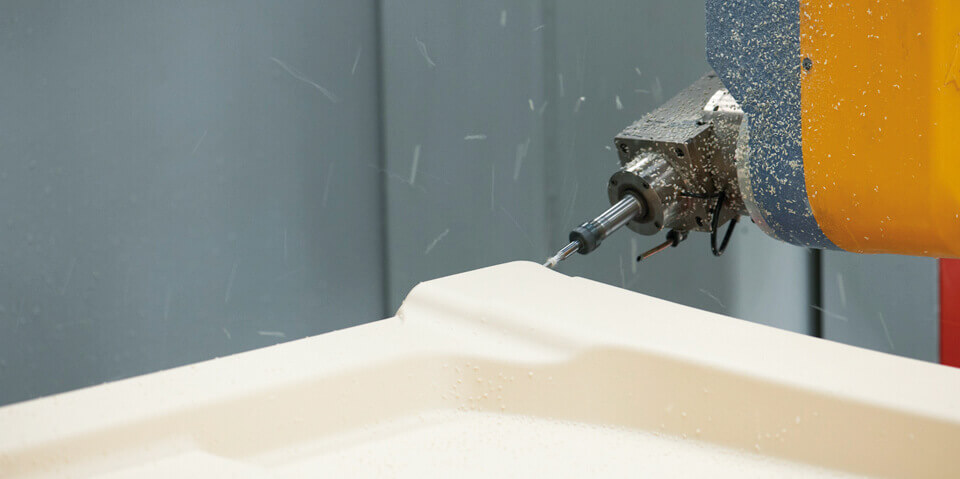
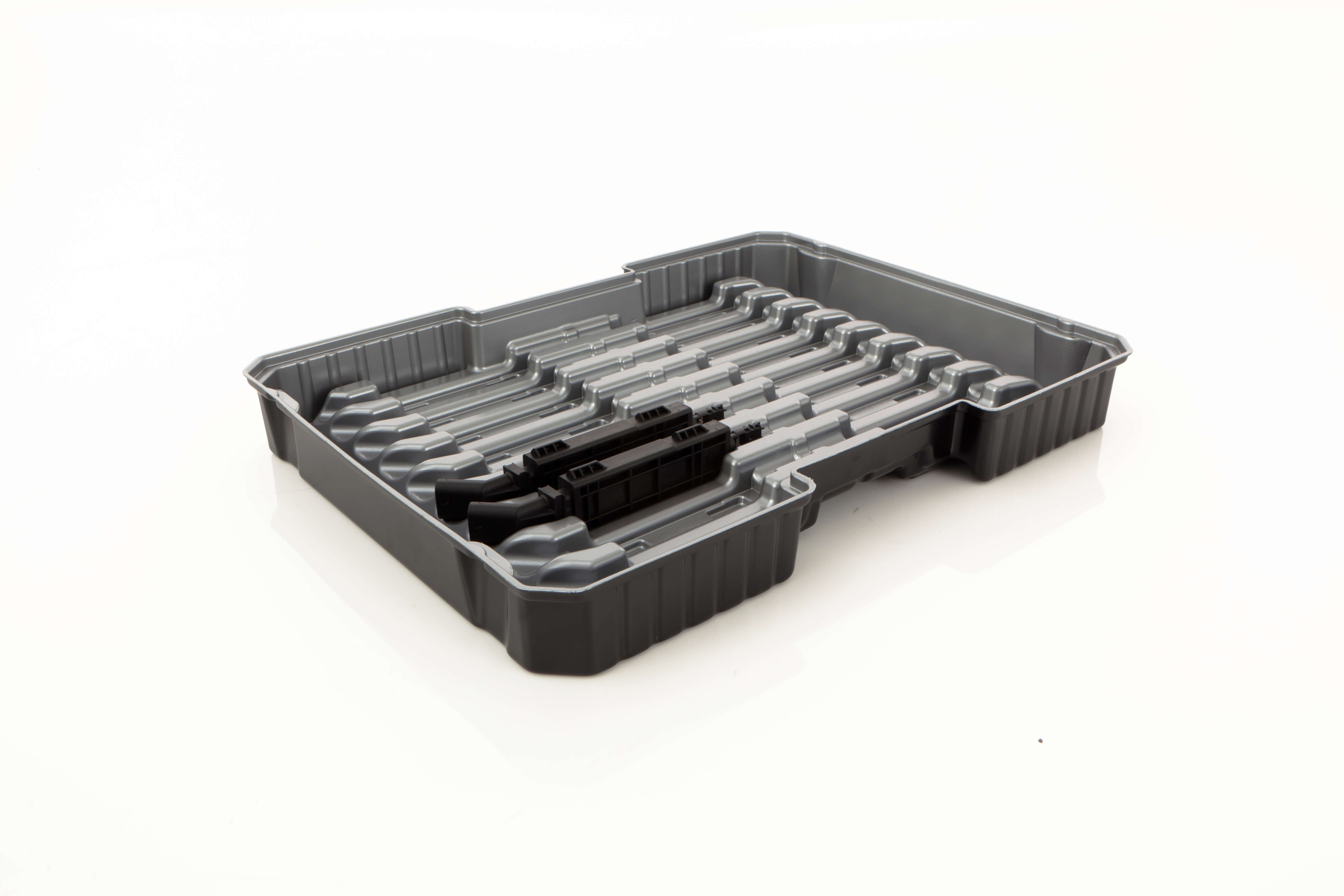
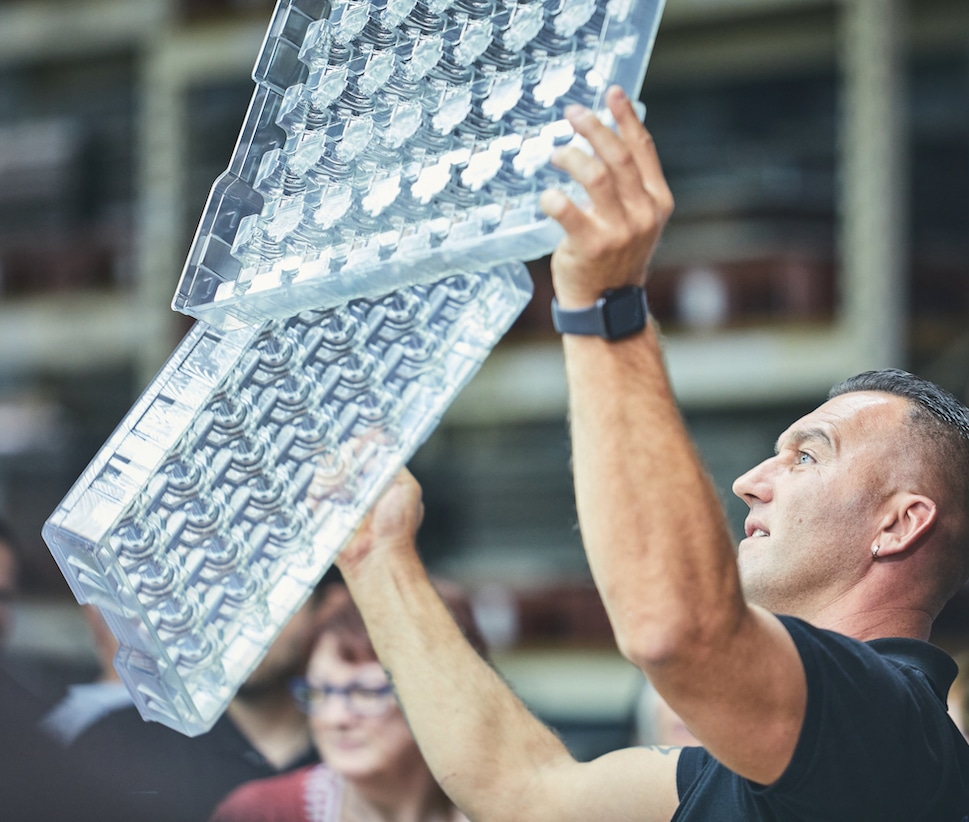
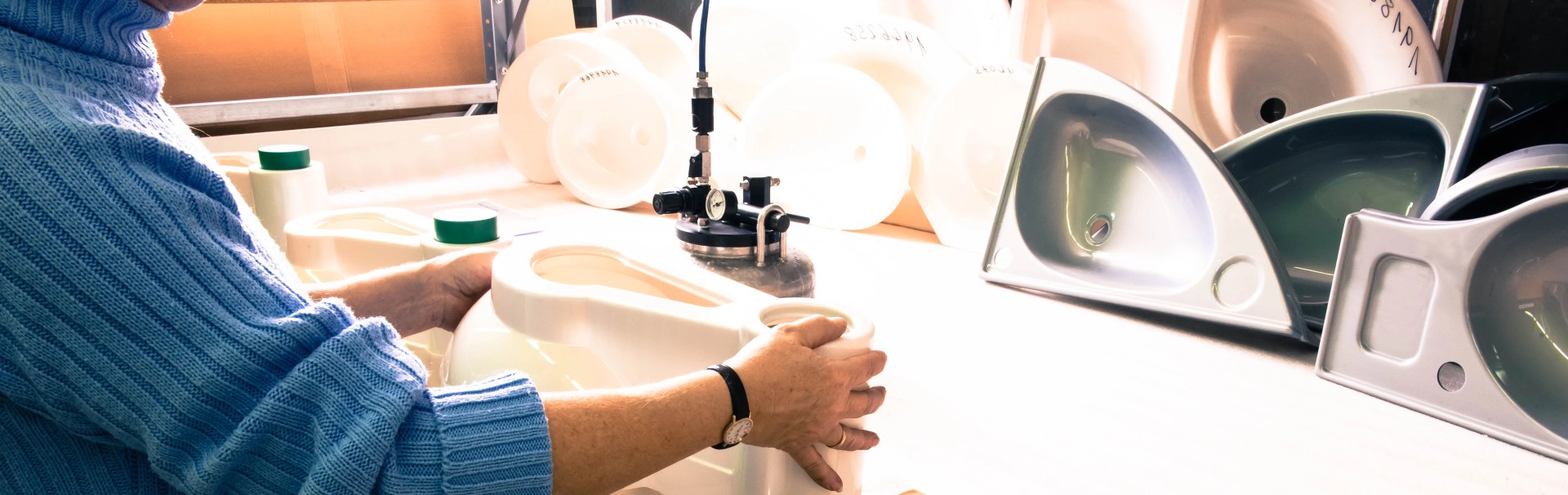
Thermoforming is one of our most important processes in plastics processing. In this process, thermoplastic semi-finished products are heated in a targeted manner to give them the desired shape in a controlled manner. Precise temperature control ensures uniform heating and enables a low-stress, material-compatible component design.
Depending on the geometry, quality requirements and desired quantity, we use suitable mold and tool solutions. This results in economically manufactured components with high repeat accuracy – from functional individual parts to components suitable for series production.
Thermoforming offers great flexibility in shaping and is ideal for components with curved surfaces, defined radii or complex contours.
Interesting facts about forming & bending plastics
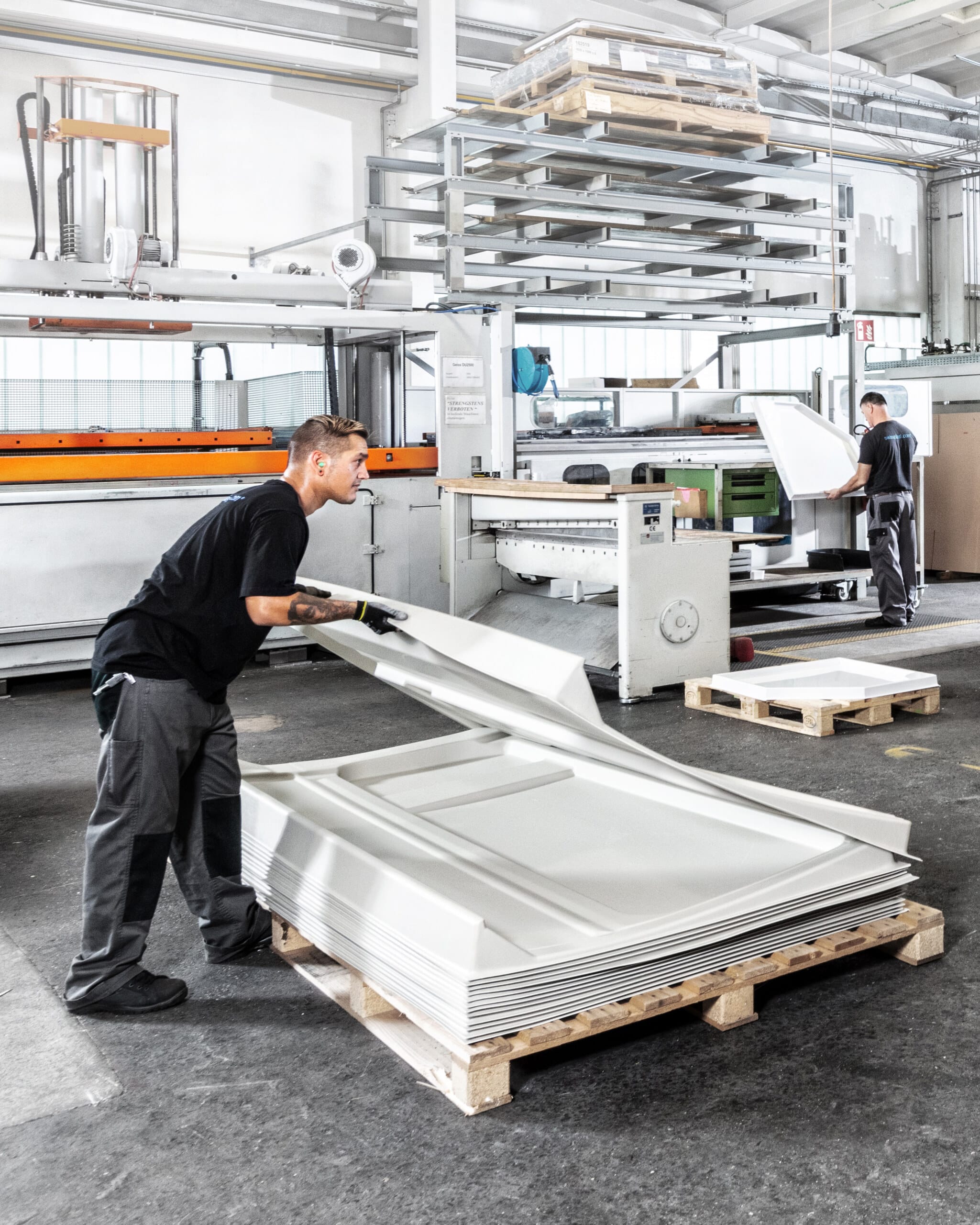
Similar to thermoforming, the forming and bending of plastics is a process for the targeted shaping of semi-finished thermoplastic products. The difference lies in the focus: while classic thermoforming produces three-dimensional molded parts, plastic bending concentrates on the targeted shaping of radii, edges and contours. The process is particularly suitable for panels, covers and components with defined bending radii.
The process begins with the targeted heating of the plastic sheet to the forming temperature. The material is then bent or formed into the desired shape in a controlled manner. After cooling, the component retains its new geometry permanently. Depending on the requirements, different molds, devices or tools are used.
During forming and bending, the plastic is heated in a targeted and controlled manner. This preserves the material structure, minimizes stresses and produces durable, dimensionally stable components. The process is particularly suitable for high-quality visible parts and functional components with high quality requirements.
Thanks to precise process control and coordinated tools, curved plastic components can be produced with high dimensional accuracy. Even in series applications, the geometry remains reproducibly constant, a decisive advantage for technical applications and precisely fitting assemblies.
Plastic forming and bending is ideal for components with high visual requirements. Clean edges, uniform radii and high-quality surfaces allow them to be used as visible design and cladding elements in machinery, vehicles, architecture or interior fittings.
Numerous thermoplastics such as PMMA, polycarbonate, ABS or PETG are suitable for forming and bending. The choice of material depends on the requirements for stability, appearance, weather resistance or temperature resistance. Different material thicknesses and surfaces also expand the design options.
Efficient forming processes allow components to be produced with less material and fewer processing steps. This saves time and costs, especially compared to multi-part designs or alternative materials. At the same time, the process enables high repeat accuracy in series production.
Formed and bent plastic parts are used in numerous industries – from mechanical engineering and vehicle construction to architecture and design, exhibition stand construction and interior design. The combination of design freedom, cost-effectiveness and functional properties ensures that demand for these solutions is constantly growing.
Further topics