
CNC-assisted plastic milling of deep-drawn parts
Technology
Technology
Precise plastic processing using CNC milling
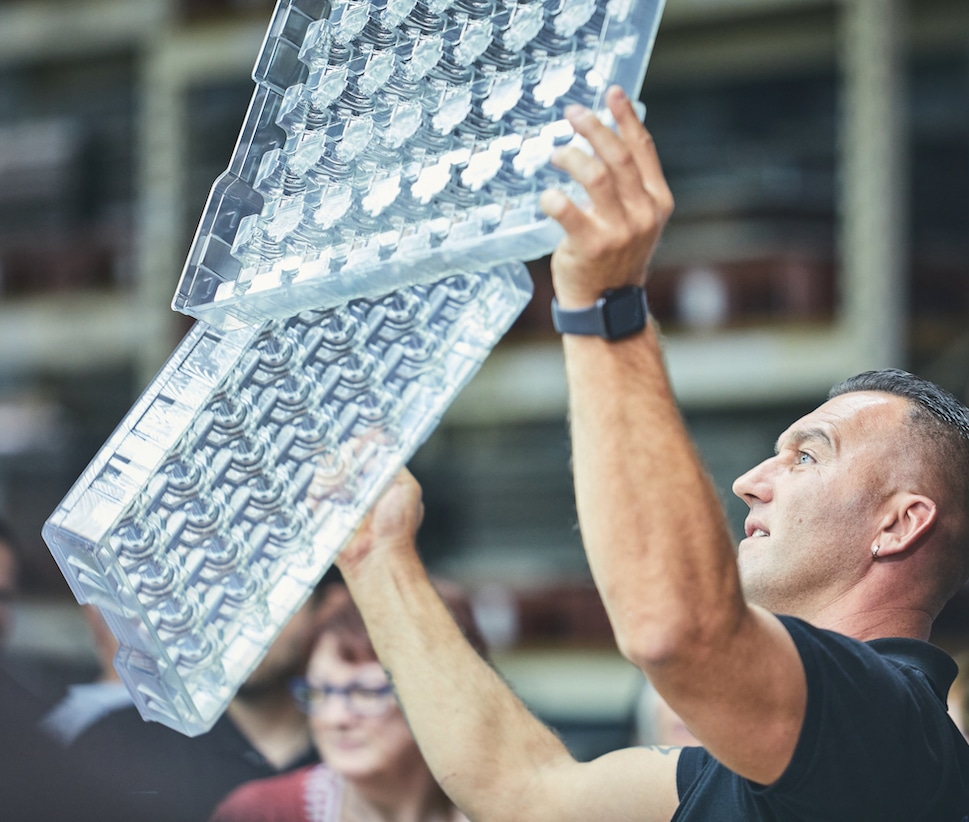
Plastics and thermoplastics are replacing metals and other materials due to their advantages such as malleability, resilience and efficiency. CNC-based plastic milling gives swissplast’s molded parts, prototypes, tools and trays the precision for which our plastics technology is known.
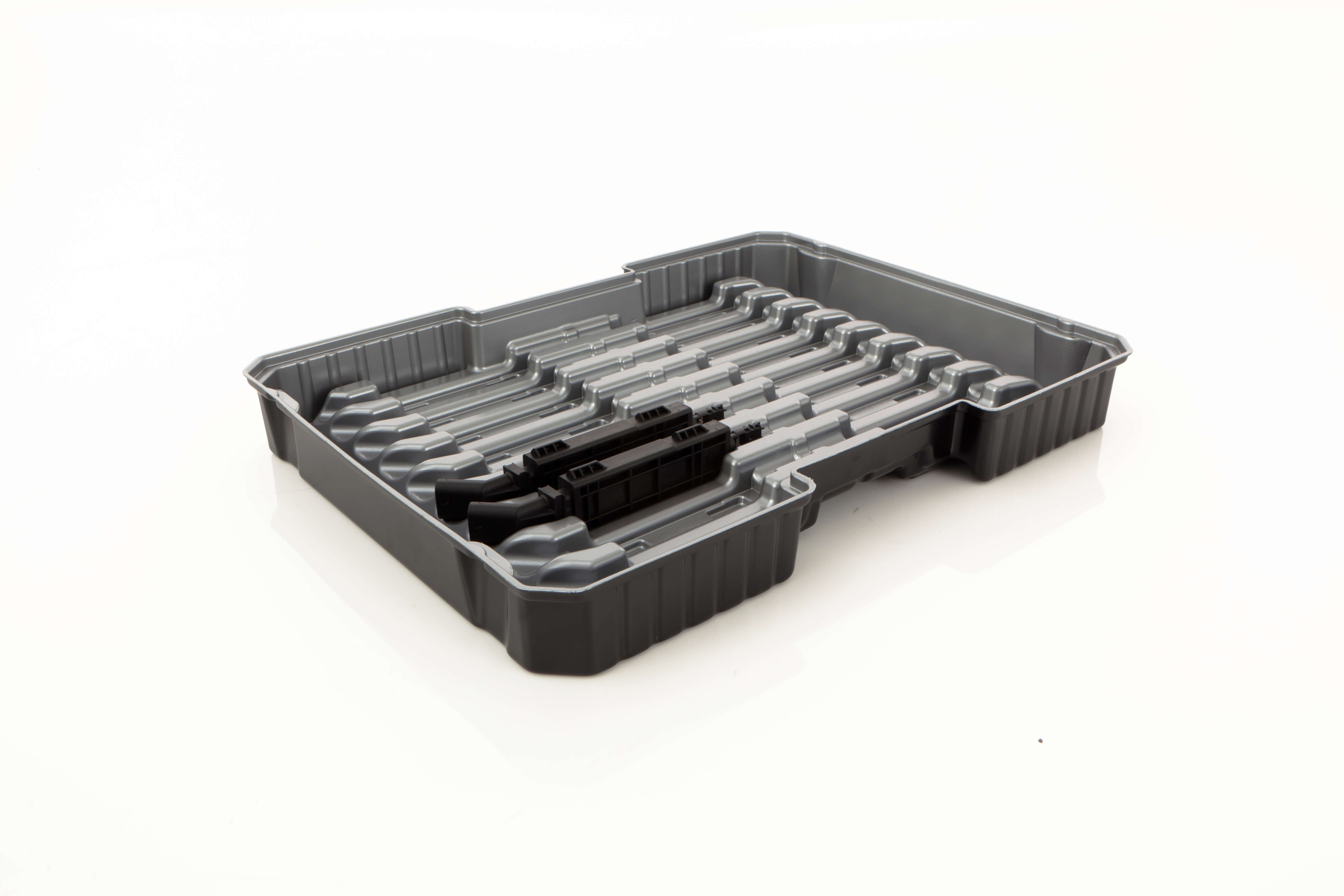
We manufacture technical plastic molded parts and plastic transport containers using our plastic thermoforming process before the 5-axis CNC milling centers fine-tune the products.
Full control thanks to on-site CNC milling
Plastic milled into shape: CNC milling at swissplast
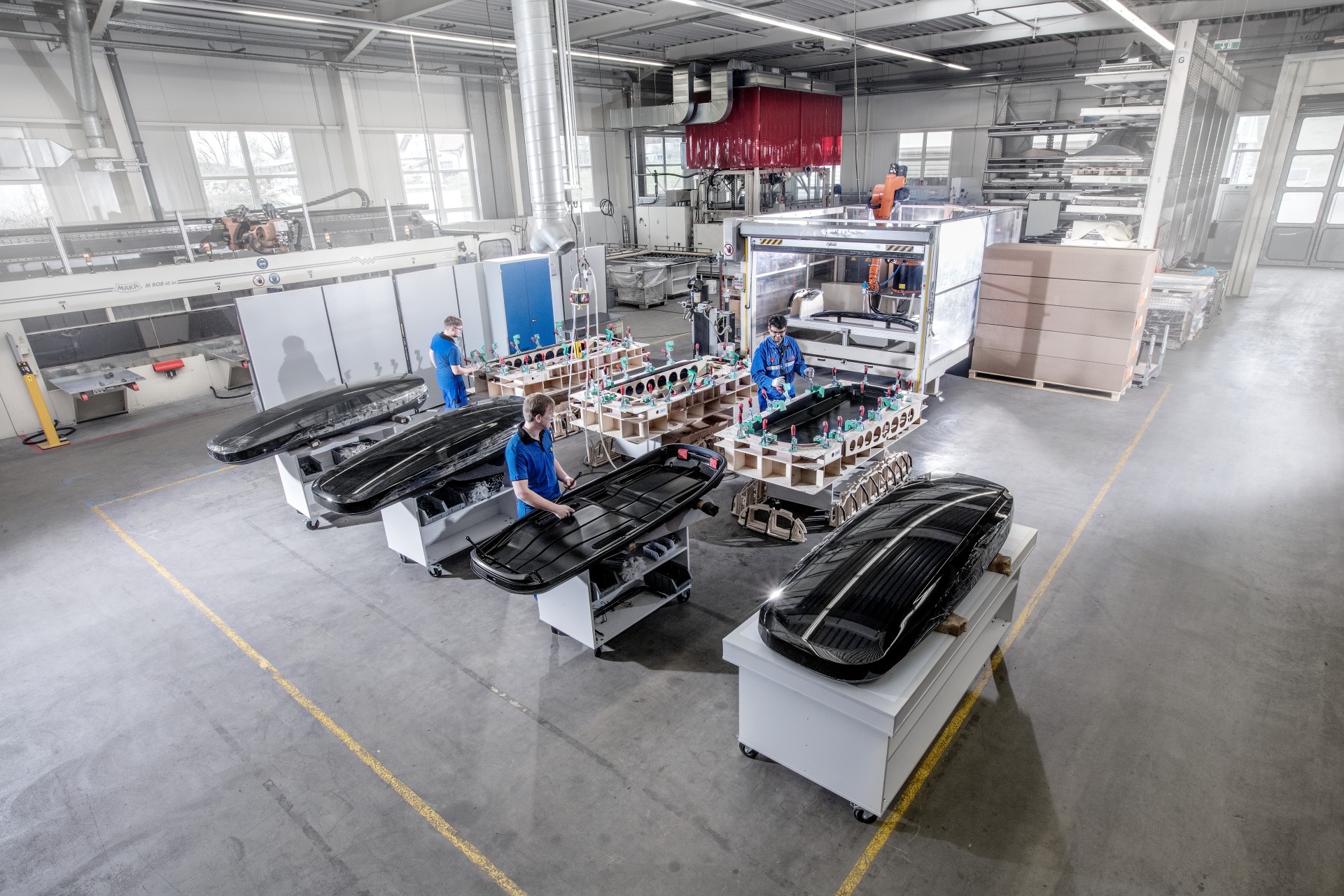
At swissplast, we manufacture thermoformed parts using the latest CAD-CAM-CNC technology. These are processed to such an extent – entirely according to customer requirements – that they can be installed directly. When CNC milling our plastics, we always pay attention to high quality – our error rate of 0.3 percent has been proof of our precision standards for many years.
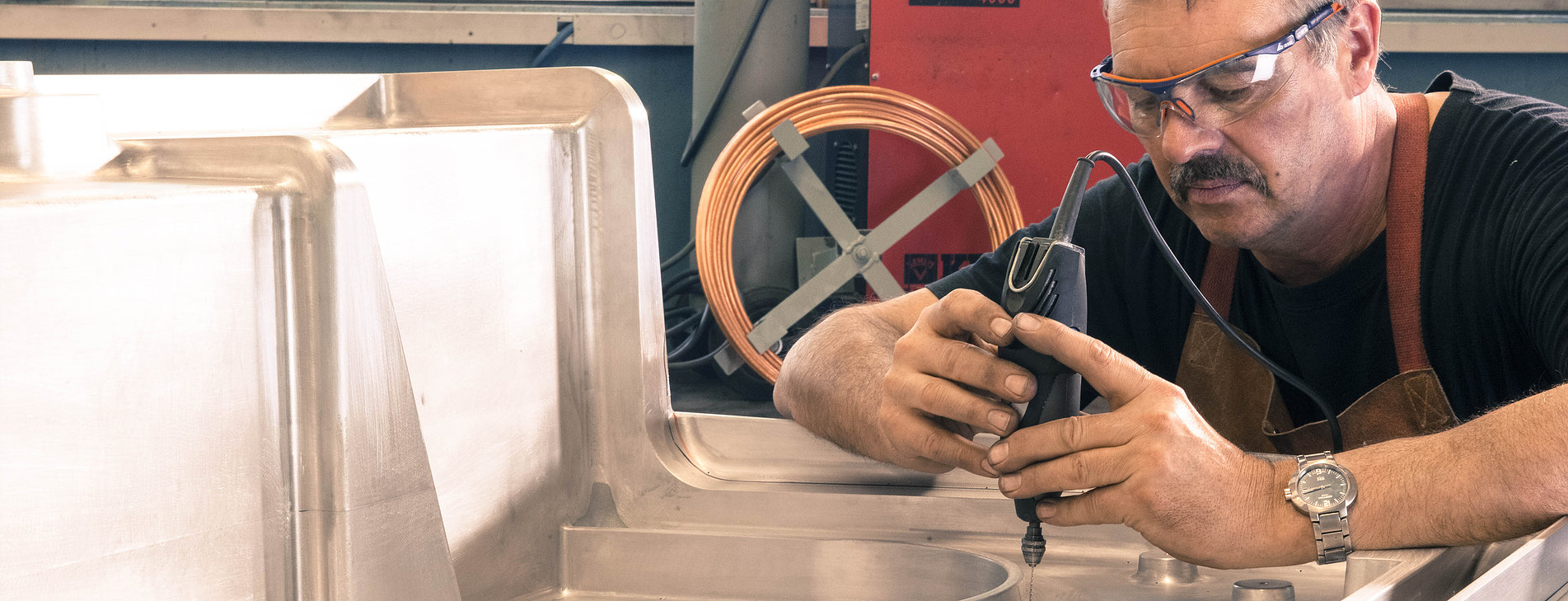
As we know that a lot depends on the choice of tool and the right cutting speed when processing plastics, we always use the latest plastics technology at swissplast. If the milling cutter is too blunt, the plastic can melt due to the friction-induced heat and produce unclean cutting edges. If the cutting speed is too low, the chip may also be torn off and not cut cleanly. At swissplast, we therefore work exclusively with sharp milling cutters and high cutting speeds in order to produce plastic molded parts with perfect surface properties.
Trust the specialist for CNC milling of thermoformed plastic parts
Commission the experts in plastics processing: swissplast uses vacuum forming and plastic thermoforming processes to produce exceptional plastic parts, packaging and plastic prototypes. We are characterized by our excellent service, which includes complete post-processing options such as CNC milling, sawing or drilling. You can rely on the quality of our plastics production, which can also produce small batches and pilot series cost-effectively. Do you have any questions about our processes or would you like advice? Then please contact us by phone or e-mail.
Precise processing of plastic sheets using cutter trimming: 2D planar trimming
As a further service, swissplast offers 2D planar trimming and digital Zünd 2D cutter routing. A distinction is made between 2D trimming, 2.5D trimming and 3D trimming, with the numbers indicating the number of trimming dimensions in each case. With 2D trimming, the workpiece or plastic sheets are processed in two spatial directions (X and Y). The processing depth (Z) is set in advance and cannot be changed later on. This means that only planar plastic sheets that have not been curved or produced using the thermoforming process can be trimmed using this method.
Special features of cutter trimming in the 2D cutter routing area
At the heart of our Zünd 2D digital cutter trimming modules is a powerful high-frequency spindle with an automatic 8-position tool changer, which is tailored to different requirements and applications.
The Zünd 2D digital cutter trimming machines from swissplast consist of a special vacuum table with two high-performance vacuum pumps and automatically controlled vacuum zones, so that no special vacuum gauges or vacuum devices are required. This means that orders and special requirements can be implemented quickly and precisely.
Working areas of the Zünd 2D cutter
The digital Zünd 2D cutter routing and 2D trimming machine has two working areas:
| Single workspace | Tandem operation | |
|---|---|---|
| Mode of operation | The entire surface of the machine is used. | For tandem operation, the working area of the machine is divided, which increases productivity. |
| depth | 3100mm | 3100mm |
| width | 3100mm | 1500mm |
| Thickness | 2 to 10mm | 2 to 10mm |
| Special feature | The mirroring of the first working area of the cutter trimming machine in tandem operation makes it possible to process several plastic parts at the same time. |
Single working area: The entire surface of the machine is used.
The working area dimensions are:
- Depth = 3100mm
- Width = 3100mm
- Thickness = 2 to 10mm
Tandem operation: For tandem operation, the working area of the machine is divided, which increases productivity.
The tandem working area dimensions are:
- Depth = 3100mm
- Width = 1500mm
- Thickness = 2 to 10mm
Mirroring the first working area of the cutter trimming machine in tandem operation makes it possible to process several plastic parts at the same time.
The speed of the machine depends on the thickness of the plastic sheet being processed. For thin-walled plastic sheets with a thickness of up to 3 mm, the maximum feed speed is 20 meters per minute. For plastic sheets between 4 and 10 mm, the processing feed (F) is adjusted to achieve the desired trimming result and the quality of the trim.
Our production process – from the plastic sheet to the CNC-milled deep-drawn part
CNC milling is an important work step that we offer after deep drawing. This brings us one step closer to the finished product that our customers order from us.
Step 1: Plastic plate
Step 1: Plastic plate
The starting materials for all our production processes are plastic sheets made of ABS, ABS-PMMA, PC, PS, PS/PE and PET. We purchase these from our partners in the appropriate color, thickness and size.
Step 2: Deep drawing
Step 2: Deep drawing
The plastic sheet is heated until it can be shaped. The sheet is then pulled over a prefabricated template while the air is extracted. This gives the plastic the desired shape.
Step 3: CNC milling
Step 3: CNC milling
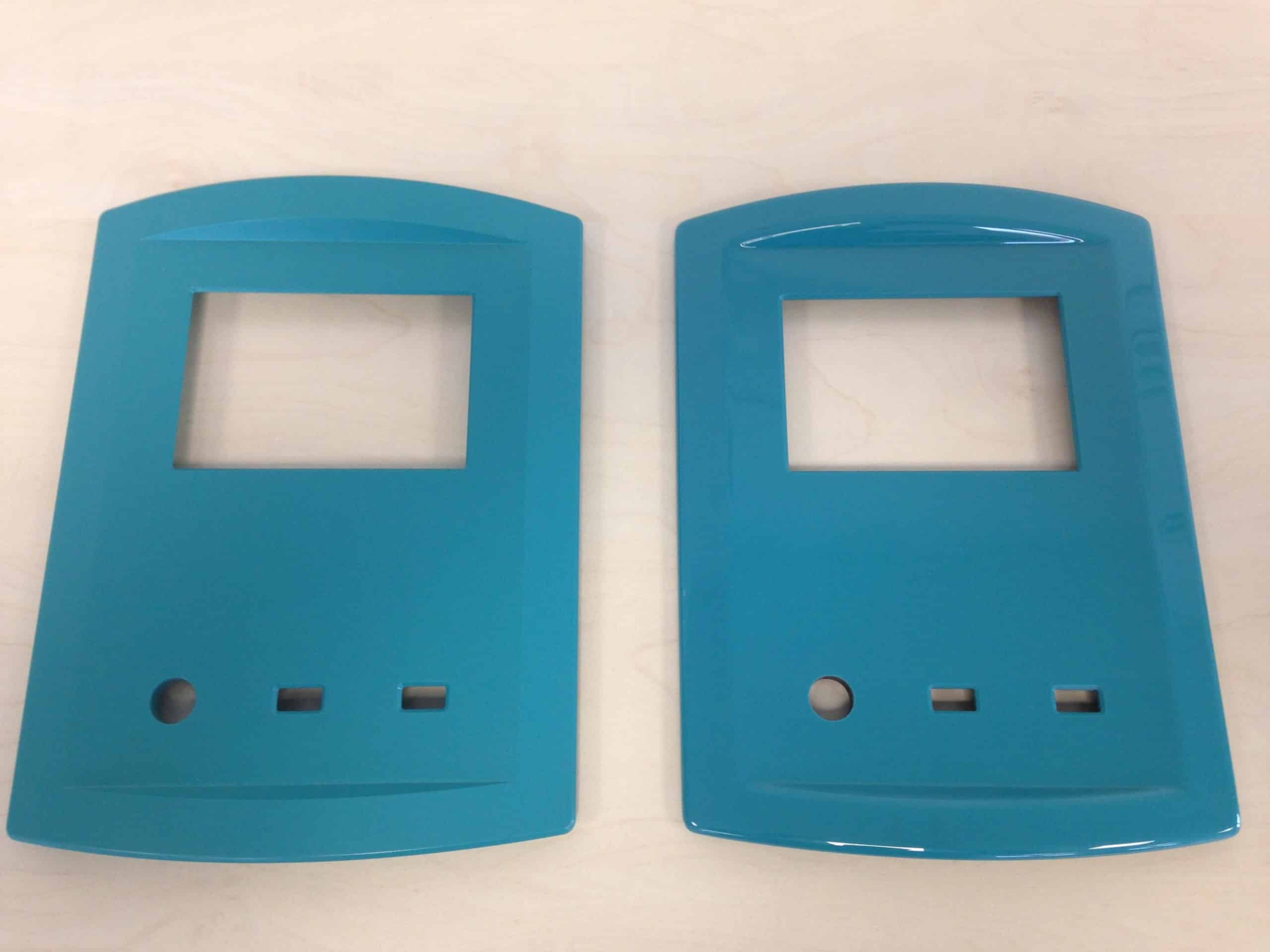
After forming and cooling, the workpiece is clamped in our CNC milling machines and machined according to a specified program. Here we can realize punchings, recesses and perforations. After CNC milling, the workpiece is ready for dispatch or, if necessary, is further processed with the help of assembly production.
Interesting facts about CNC
CNC stands for “Computerized Numerical Control”. It is a technology in which machines – such as milling machines, lathes or lasers – are controlled by a computer. CNC technology enables complex processing steps to be carried out automatically with high precision and repeat accuracy. This is used in manufacturing technology to produce precise parts that are manufactured according to precisely defined specifications.
CNC works by controlling a machine through a computer that gives precise instructions on how to process a workpiece. First, a digital 3D model is created that contains all the dimensions and details. This model is then translated into CNC program code, usually G-code, which specifies the exact movements and processing steps. The machine executes the instructions automatically and processes the material precisely along the specified axes.
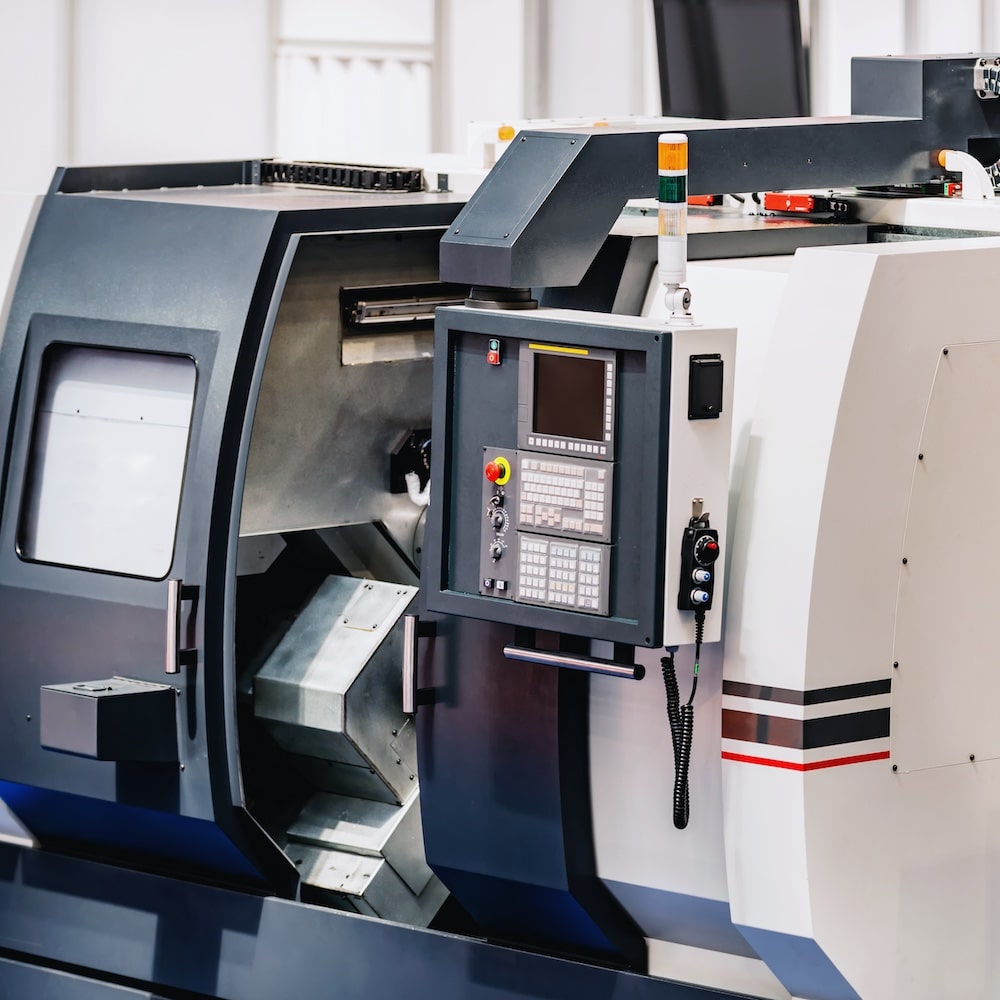
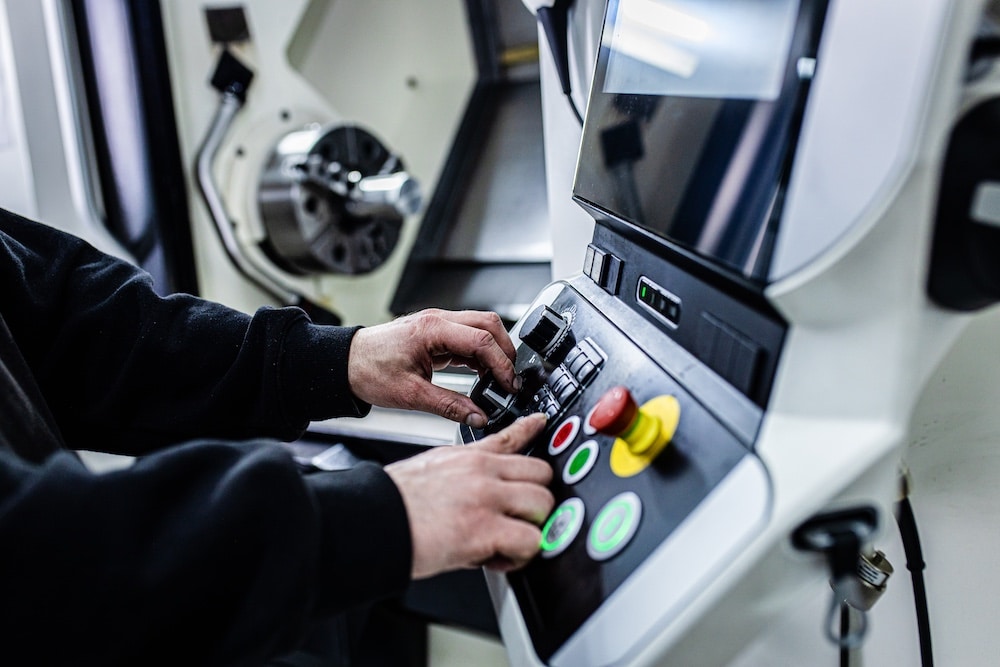
Among other things, swissplast uses 5-axis CNC milling machines that enable complex machining with high precision. These machines are designed for the efficient and precise machining of plastic parts. With various CNC machines, swissplast can also realize demanding geometries and tight tolerances. In-house production makes it possible to work without external partners, which reduces production times and costs.
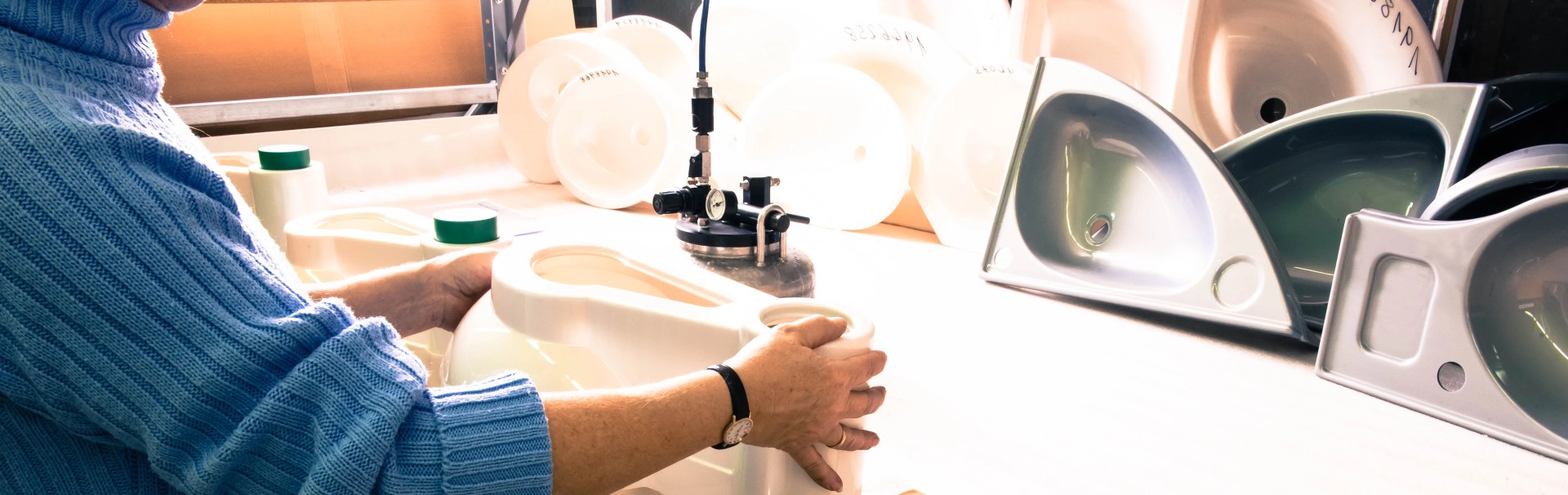
In the plastics processing industry, the optimal and precise realization of products is a central point. Where some companies only form the plastic, swissplast thinks ahead and offers CNC milling in addition to thermoforming plastic molded parts. CNC plastic milling is an important step in this respect, as you as the customer receive the finalized and ready-to-install plastic component. In our production, these can be plastic covers, plastic cladding, plastic housings, but also shower trays for camping vehicles, for example. We supply you with the desired molded part, which can be installed immediately. All recesses, notches, strips and holes are already included in the product. This means you don’t have to do the plastic milling yourself and save time and money with CNC plastic milling by swissplast.
The great advantage of CNC plastic milling machines is that they work very precisely and very quickly. The technological developments of recent years in the field of CNC plastics, CNC milling plastics and CNC plastics processing enable computer-controlled, fully automated post-processing of plastic molded parts. At swissplast, we stand for special plastics, simple communication and precisely manufactured plastic parts. This also includes making full use of our technical possibilities such as plastic CNC milling. After the thermoforming process, in which the basic shape of the plastic part is determined, the precision work is carried out with the plastic CNC milling machine. This works on five axes and reliably implements milling jobs in the range of tenths of a millimeter. Feel free to contact us with your project and request for plastic milling using CNC. We will advise you without obligation.
swissplast also makes use of the modern production methods CNC, CAD and CAM. All three abbreviations stand for computer-controlled processes in production. CNC is short for Computerized Numerical Control. It therefore refers to the computer control of work steps such as plastic milling. CAD stands for computer-aided design. The digital creation of models is a common step in production today. CAM is the abbreviation for computer-aided manufacturing. The use of computers has long been state of the art in this area too, and swissplast can no longer imagine life without them. We will be happy to create a 3D model of your plastic part to be manufactured and work with you to develop a work plan for production – including everything from thermoforming to CNC plastic milling. Contact our professionals for CNC plastic milling today.
swissplast offers the advantages of thermoforming and CNC milling completely under one roof, which guarantees continuous quality control and high precision. This combination enables plastic parts to be efficiently formed into the desired basic shape and then precisely machined. Direct post-processing with CNC milling achieves maximum accuracy for complex shapes and tight tolerances. The internal process minimizes delivery times and reduces production costs. Customers receive ready-to-install parts without additional external processing steps.
Further topics